Glipt je hond steeds uit zijn tuig? Dan ligt het bijna altijd aan de pasvorm, niet aan pech. De meeste wandeltuigen kun je maar op één of twee plekken verstellen. Daardoor zitten ze nooit goed op een hond met een brede borst, een slank windhondachtig lijf of een hond die hard draait als hij schrikt. De oplossing is een tuig met genoeg verstelpunten, meestal vijf, zodat je de halsopening, de borstband en de buikband apart kunt afstellen. Combineer dat met de twee-vingertest: onder elke band passen precies twee vingers, niet meer en niet minder. Klopt dat, dan is uit het tuig wurmen geen dagelijkse zorg meer.
In dit artikel
- Waarom glipt mijn hond steeds uit zijn tuig?
- Hoeveel verstelpunten heeft een tuig echt nodig?
- Hoe controleer ik of het tuig van mijn hond goed zit?
- Wat is het verschil tussen de borstring en de handgreep op de rug?
- Wat doe ik als mijn hond in paniek raakt en achteruit wurmt?
- Veelgestelde vragen
Waarom glipt mijn hond steeds uit zijn tuig?
Honden glippen om een handvol voorspelbare redenen uit hun tuig: een te losse halsopening, een borstband die na de eerste keer nooit meer is afgesteld, paniek in een nieuwe of lawaaierige omgeving, of een lichaamsbouw waar het tuig eigenlijk niet voor gemaakt is (diepe borst, smalle taille, dikke wintervacht). Een hond die één keer is ontsnapt en ermee wegkwam, probeert dezelfde beweging vaak opnieuw, omdat het werkte.
Het goede nieuws: bijna al deze oorzaken komen neer op één ding, het afstellen van de banden. Een tuig met alleen een hals- en buikband geeft je twee knoppen om een driedimensionaal probleem op te lossen. Een tuig met vijf losse verstelpunten, bij de hals, aan beide kanten van de borst en bij de buik, laat je elk gat dichten waardoor een hond kan ontsnappen, zonder dat het minder comfortabel wordt.
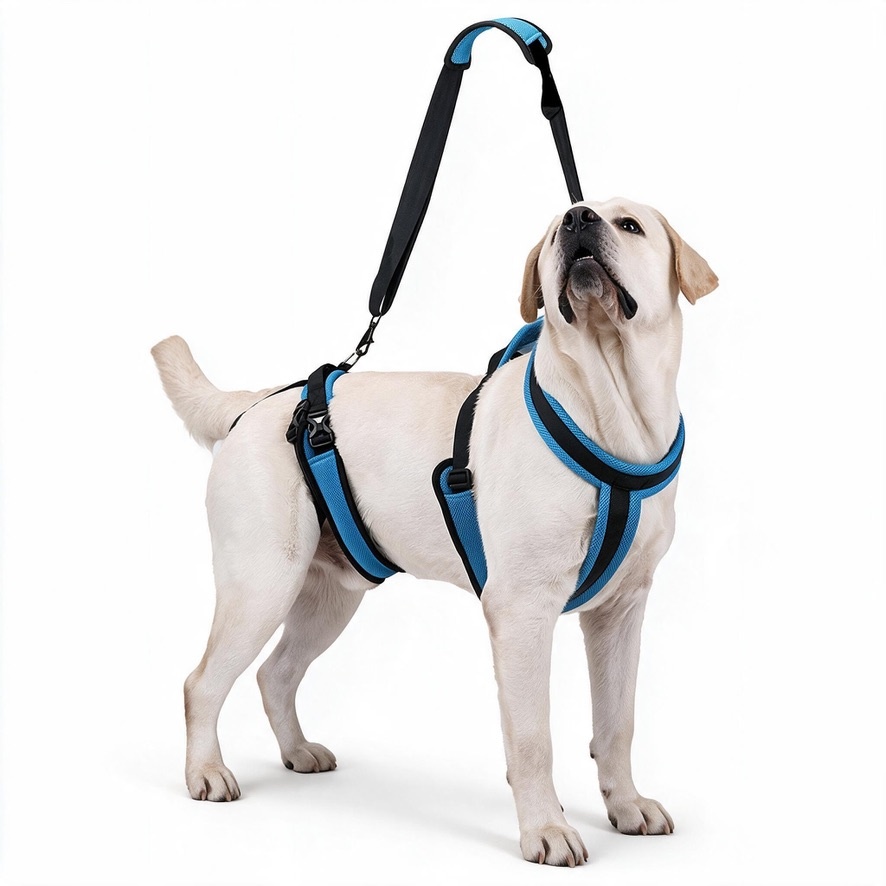
Gevoerd mesh met vijf verstelpunten, een borstring voor gewone wandelingen en een handgreep op de rug voor extra controle.
Hoeveel verstelpunten heeft een tuig echt nodig?
Vijf is het getal om op te letten: twee bij de halsopening, twee bij de borst en één bij de buik achter de voorpoten. Minder dan dat, en je laat één band een pasvormprobleem oplossen waar hij nooit voor bedoeld was. Meer verstelpunten betekent ook niet meer gedoe. Staat elke band eenmaal goed voor de bouw van je hond, dan kom je er zelden nog aan.
| Soort tuig | Verstelpunten | Kans op ontsnappen |
|---|---|---|
| Eenvoudig bandentuig | 1 tot 2 | Hoog, de halsopening kun je niet los van de borst afstellen |
| Instaptuig | 1 tot 2 | Gemiddeld tot hoog, vooral als de hond achteruit gaat hangen aan de lijn |
| Tuig met vijf verstelpunten (Lupo tiltuig) | 5 | Laag, elk deel is afgesteld op de echte maten van de hond |
Hoe controleer ik of het tuig van mijn hond goed zit?
Loop deze stappen door als het tuig om zit, voordat je de lijn vastmaakt:
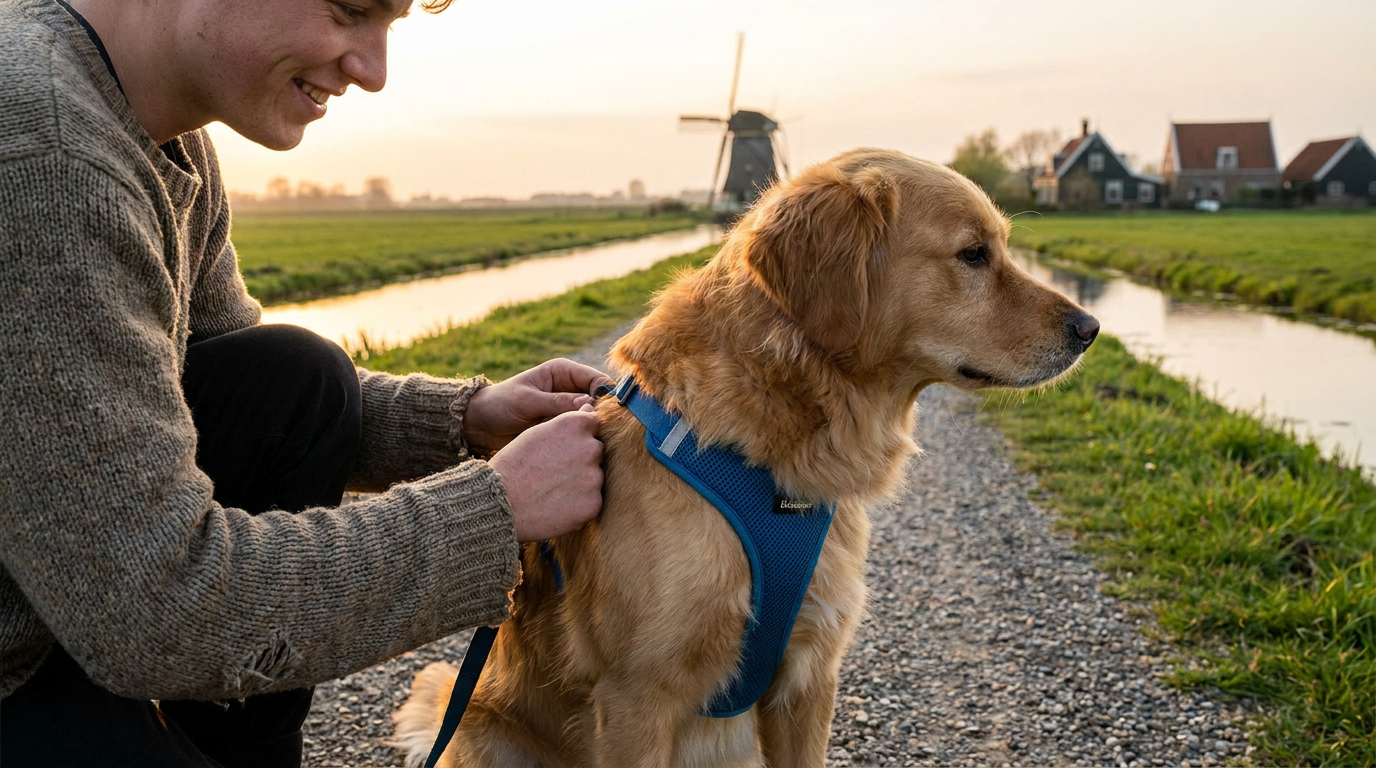
- Twee-vingertest bij de hals. Schuif twee vingers plat onder de halsband. Glijden ze er met ruimte over in, trek hem dan strakker. Krijg je er geen vinger onder, maak hem dan losser.
- Twee-vingertest bij borst en buik. Doe hetzelfde bij beide borstbanden en de buikband. Elk punt moet strak zitten, maar niet knellen.
- De trek-naar-achter-check. Trek het tuig zachtjes naar achteren, alsof je hond eruit probeert te wurmen. De halsopening mag niet zo wijd worden dat de kop erdoor past.
- De schouderblad-check. Kijk hoe je hond een paar stappen loopt. Het tuig mag niet naar de schouders schuiven of omhoog kruipen onder de voorpoten.
- Controleer opnieuw na de eerste week. Mesh en vulling zakken iets in na dagelijks dragen, dus trek de banden na de eerste week wandelen nog één keer aan.
Laat de lijn tijdens deze check nooit omhoog aan het tuig trekken. Een trek naar boven tilt het borstdeel op en opent precies het soort gat rond de hals en voorpoten waardoor een hond kan ontsnappen. Dat punt maakt ook het advies van het Center for Pet Safety over het kiezen van een tuig (Engelstalig).
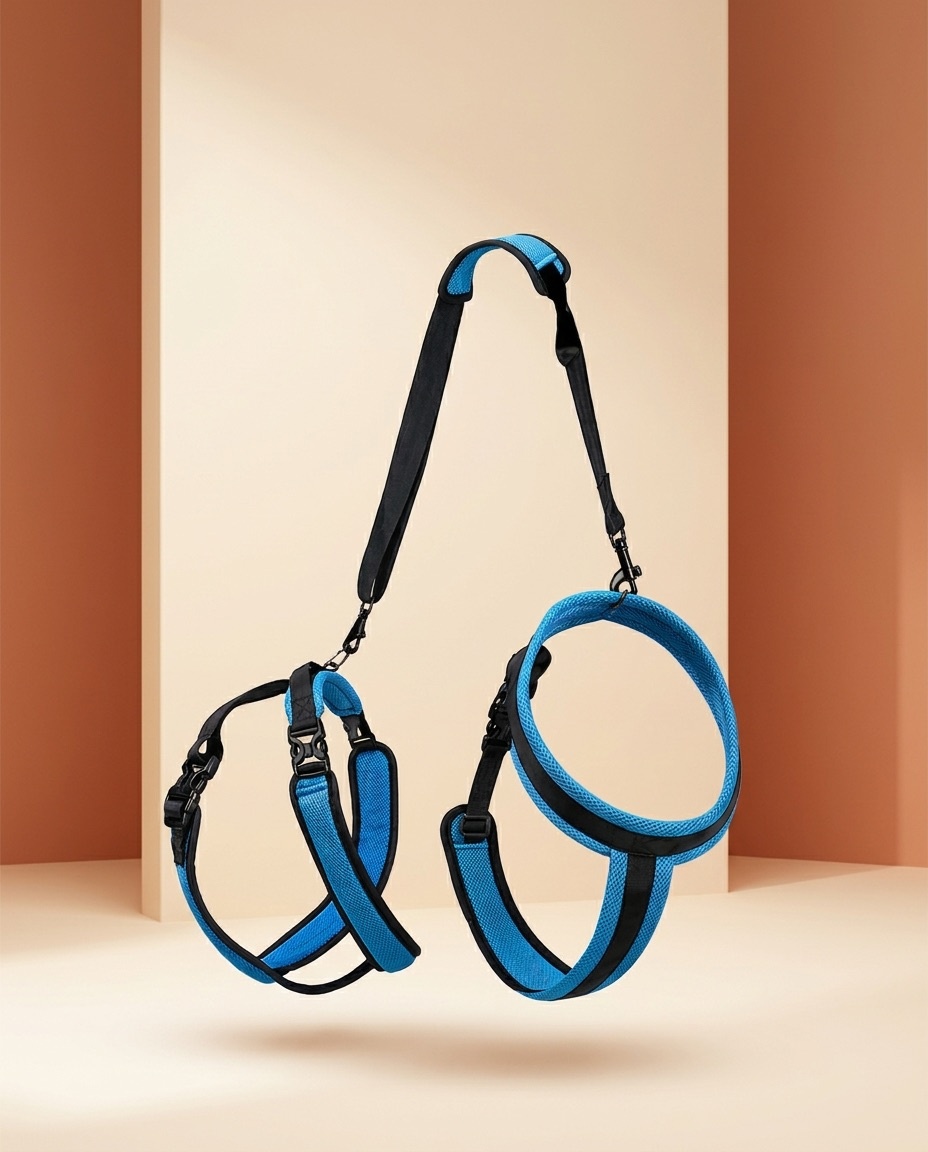
Zacht gevoerd mesh bij elke band, zodat een strakke pasvorm ook op lange wandelingen prettig blijft.
Wat is het verschil tussen de borstring en de handgreep op de rug?
Ze lossen verschillende problemen op, en een veilig tuig heeft ze allebei nodig. Aan de borstring maak je de lijn vast voor gewone wandelingen. Springt of trekt je hond hard naar voren, dan leidt de ring die trek opzij, in plaats van dat je hond met volle kracht vooruit duwt. Dat betekent ook minder spanning op de banden die het tuig op zijn plek houden.
De handgreep op de rug is niet voor gewone wandelingen aan de lijn. Het is een stevige greep voor de momenten dat je je hond direct moet optillen of ondersteunen: op de trap, bij het in- en uitstappen van de auto, of op oneffen of gladde grond. Met een handgreep daar hoef je nooit naar een halsband of losse band te grijpen als het snel en gecontroleerd moet.
Wat doe ik als mijn hond in paniek raakt en achteruit wurmt?
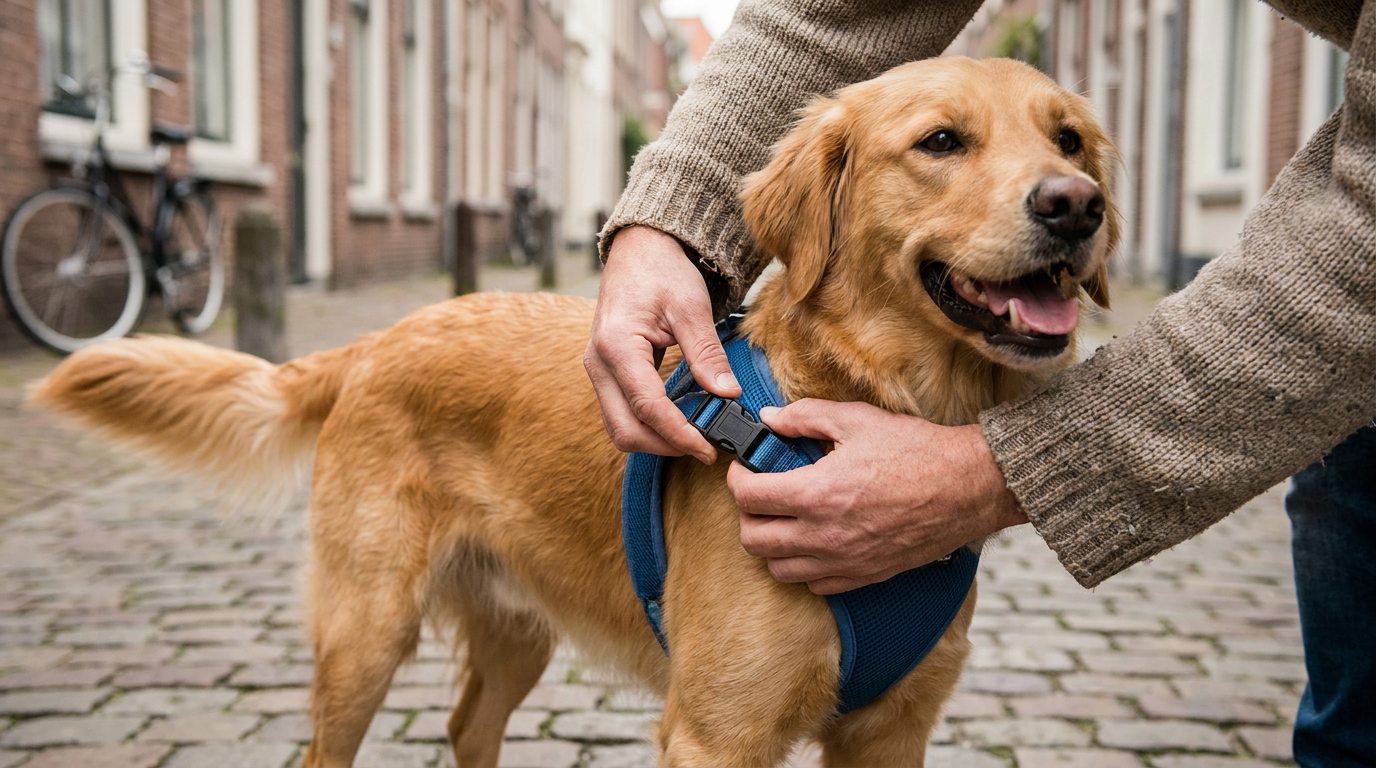
Schrikt je hond van een hard geluid, een andere hond of een onbekende omgeving? Ga dan niet achter hem aan en grijp niet naar de halsband. Daardoor trekt een bange hond meestal juist harder. Blijf rustig, hou de lijn kort maar niet strak en praat op een rustige, vertrouwde toon. Is je hond weer rustig, controleer dan het tuig met de twee-vingertest hierboven voordat je verder loopt. Is hij al vaker uit zijn tuig gewurmd? Dan heeft dit tuig niet genoeg verstelpunten voor de bouw van je hond. Dat is geen trainingsprobleem dat je zelf moet oplossen.
Honden met een echt smalle kop ten opzichte van hun nek, wat je bij sommige windhonden en terriërs ziet, hebben soms een extra veiligheidsstap nodig, zoals een dubbele verbinding tussen tuig en halsband als back-up, naast een goed afgesteld tuig met vijf verstelpunten.
Veelgestelde vragen
Waarom wurmt mijn hond zich steeds uit zijn tuig?
De meeste ontsnappingen komen door een te losse halsopening of een borstband die na de eerste keer nooit strakker is gezet. Ook paniek in een nieuwe omgeving kan ervoor zorgen dat een hond draait en achteruit trekt tot hij het gat vindt.
Hoe strak moet een hondentuig zitten?
Zo strak dat je er net twee vingers plat onder kunt schuiven, onder elke band. Past er een hele hand onder, dan zit hij te los. Krijg je er geen vinger onder, dan zit hij te strak.
Maken meer verstelpunten een tuig echt ontsnappingsbestendiger?
Ja. Met vijf losse verstelpunten stel je hals, borst en buik af op de echte maten van je hond, in plaats van dat één of twee banden een compromis moeten vinden voor alle drie.
Gebruik ik de borstring of een rugclip voor dagelijkse wandelingen?
Een borstring is meestal beter voor honden die trekken, omdat hij de trek opzij leidt in plaats van je hond met volle kracht vooruit te laten duwen. Een handgreep op de rug is om te tillen en te ondersteunen, niet om de lijn aan vast te maken tijdens een gewone wandeling.
Hoe vaak moet ik de pasvorm van het tuig controleren?
De eerste keer dat je het omdoet, opnieuw na de eerste week als vulling en mesh zich hebben gezet, en daarna af en toe als het gewicht van je hond per seizoen verandert.
Nooit meer gokken met de pasvorm
Het Lupo tiltuig heeft vijf verstelpunten, een borstring voor gewone wandelingen en een handgreep op de rug voor de trap, de auto en oneffen grond. Alles in gevoerd mesh dat comfortabel blijft.
Bekijk het Lupo tiltuig →Gratis verzending in de EU vanaf €75.
Lees ook: Is een tiltuig iets voor jouw hond? Zo weet je het zeker.
0 Kommentare