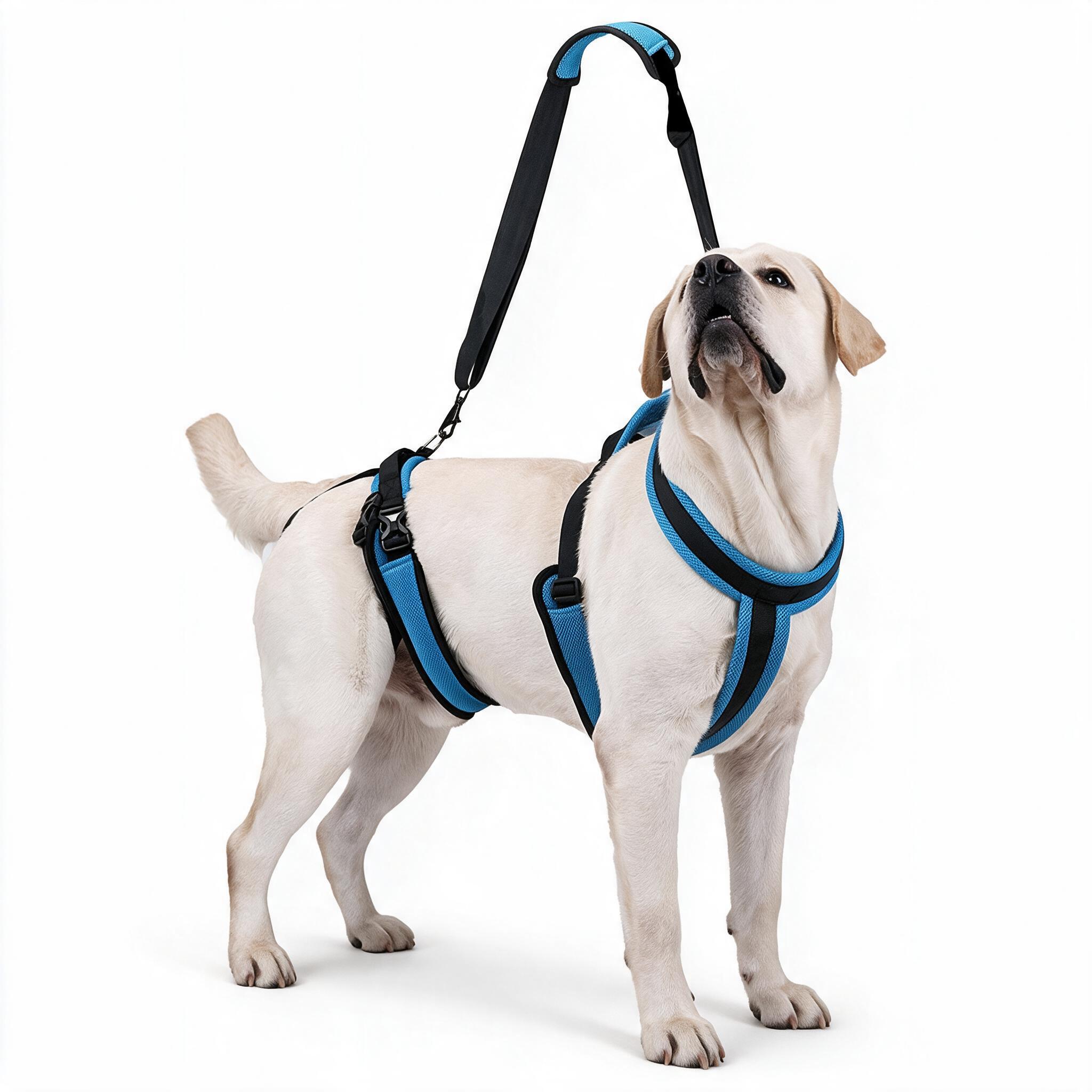
If your dog just had leg surgery, ACL, CCL, or TPLO, the biggest danger in the first few weeks usually isn't the incision itself. It's a slip on a hard floor, a stumble on the stairs, or an owner trying to lift 30kg of dog by the collar because there's nothing else to hold. The Lupo Two-Piece Lift Harness solves that problem directly. It gives you a lift handle at the front, over the chest and shoulders, and a second lift handle at the back, over the hindquarters, so you can support both ends of your dog separately through every stage of recovery, from the first week of crate rest to the day your vet finally clears normal walks again.
In this article
- How long does recovery from dog leg surgery actually take?
- Why a two-piece harness works better than a sling after surgery
- How do you fit a support harness on a healing dog?
- What mistakes do owners make during recovery?
- When can you stop using a support harness?
- FAQ
How Long Does Recovery From Dog Leg Surgery Actually Take?
Full recovery from a TPLO, CCL, or ACL repair typically runs 3 to 6 months, not the 2 to 3 weeks many owners expect. According to Saratoga Veterinary Hospital's TPLO recovery guide, the bone itself takes about 8 weeks to heal, and vets generally ask for another 8 weeks after that before a dog resumes unrestricted running and play. That's roughly 16 weeks where your dog needs more support getting around than they did before surgery, and needs it in a way that doesn't strain the leg that's healing.
This is exactly the window the Lupo harness is built for. Because it has separate front and rear support, you can lift or steady whichever end needs it that week, without putting pressure through the whole body the way a single strap or a bath towel sling does.
| Recovery week | What's usually happening | How the Lupo harness helps |
|---|---|---|
| Week 1 | Crate rest, pain management, short toilet trips only | Rear lift handle takes weight off the back legs on the way outside, no pulling through a collar |
| Weeks 2 to 4 | Short 5 to 10 minute leash walks begin | Front and rear handles used together over thresholds, doorsteps, and single stairs |
| Weeks 5 to 8 | Bone is still healing, activity stays limited | Rear support on stairs and tiled or wet floors, front handle keeps eager dogs from rushing |
| Weeks 8 to 16 | Vet-cleared longer walks, muscle is rebuilding | Support used less often, mainly for uneven ground, until your vet says full activity is fine |
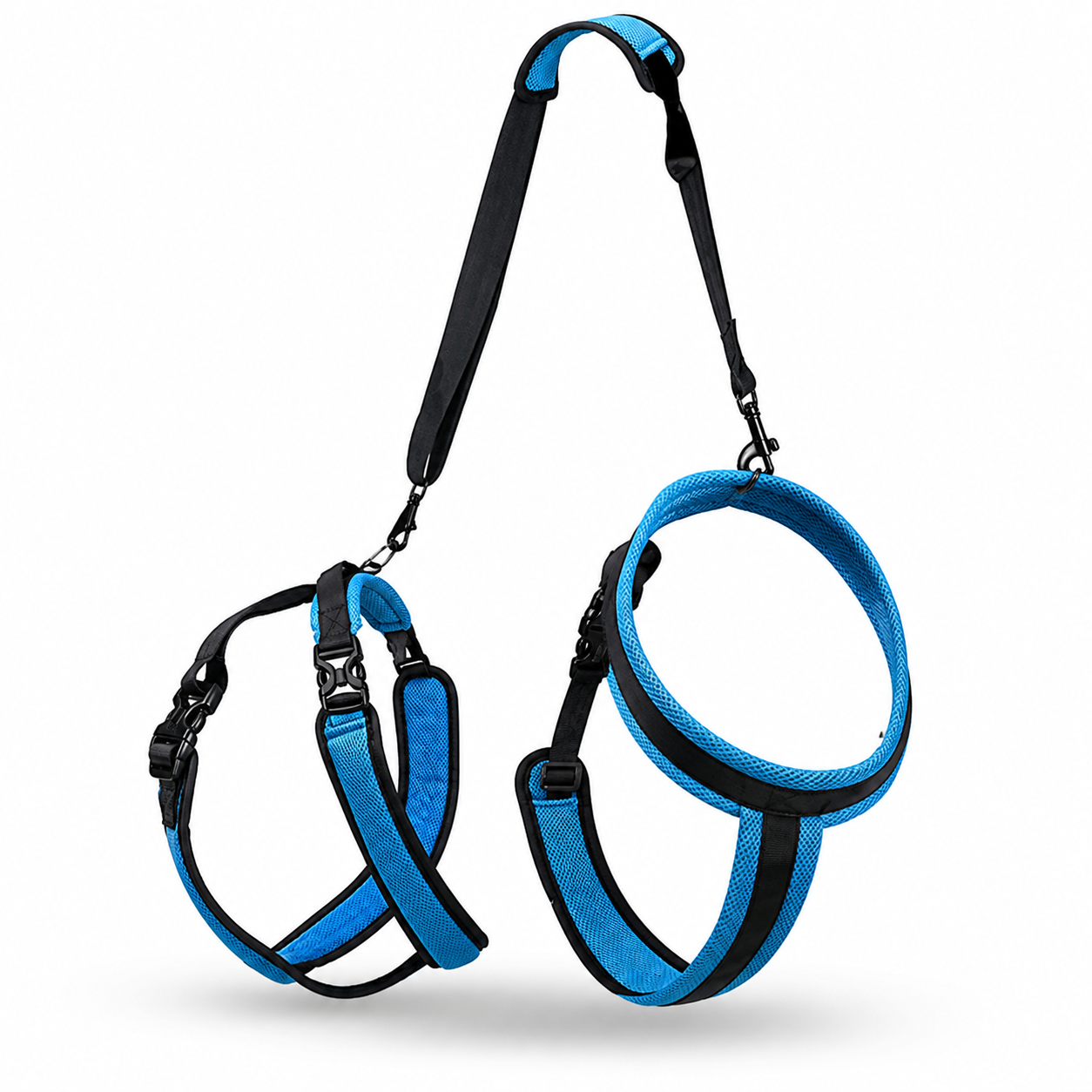
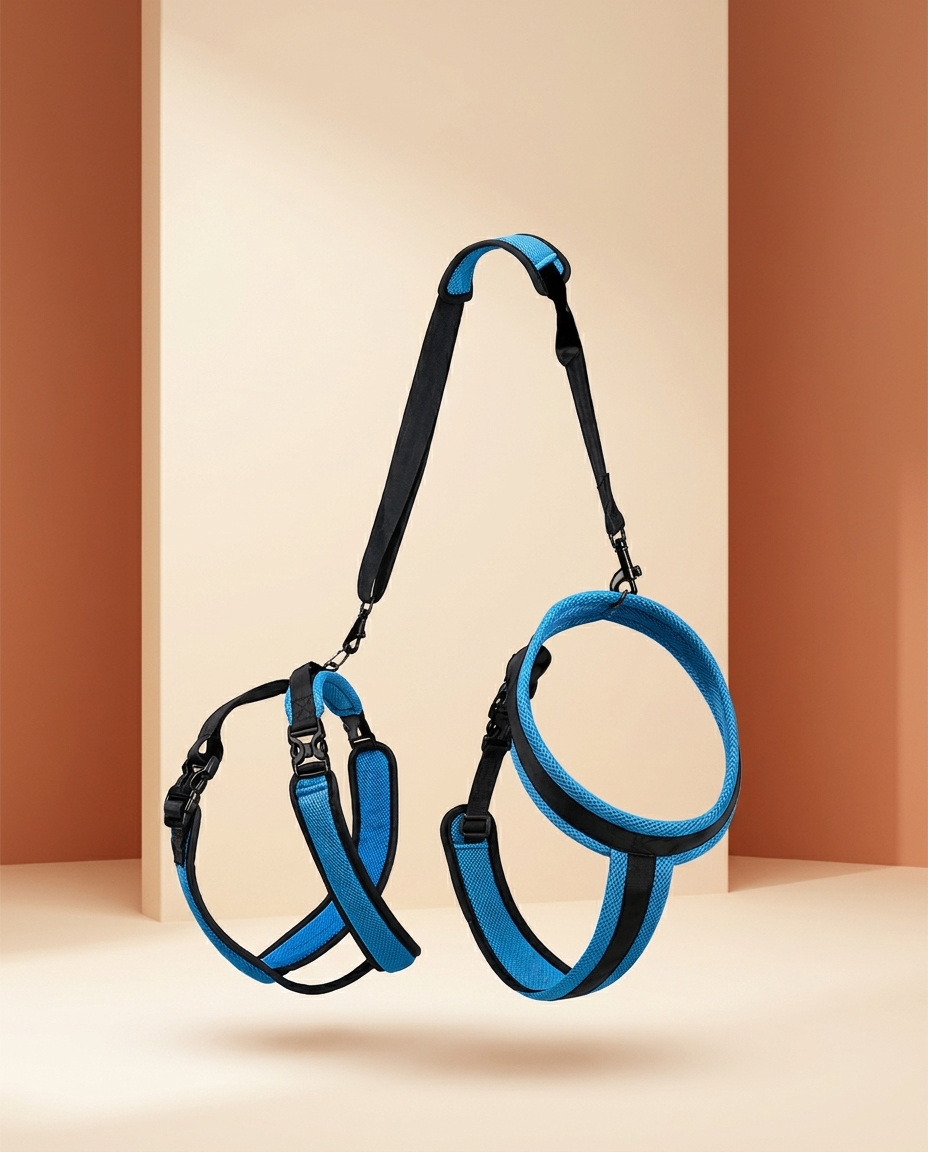
Padded front and rear pieces, each with its own lift handle, so you can support your dog's front, back, or both through every stage of recovery.
Why Does a Two-Piece Harness Work Better Than a Sling After Surgery?
A bath towel sling or a single strap only supports one end of the body, and it usually sits loose, which means it can shift and press right against a fresh incision. The Lupo Two-Piece Lift Harness is built specifically to avoid that. The front piece sits across the chest and shoulders, well clear of a rear leg incision, and the rear piece sits over the hips, well clear of a front leg or shoulder repair. Each piece has its own padded lift handle, so you decide, week to week, which end needs help.
That separation also matters for dogs recovering from a knee or hip procedure specifically, since most of the strain during walking, standing up, and using stairs falls on the back legs. Having a dedicated rear handle on the Lupo harness means you can catch your dog before they slip, rather than trying to catch 30kg of falling dog with your hands.
How Do You Fit a Support Harness on a Dog Recovering From Surgery?
Fit matters more after surgery than at any other time, because a harness that's too loose won't give you real control, and one that's too tight can rub against the surgical site. The Lupo harness has five adjustment points across the two pieces, which lets you fit each one independently around bandages, shaved fur, or swelling that changes week to week. We cover the exact adjustment process in our post on fixing a harness that slips, and the same five points apply here.
As a general rule, you should be able to fit two flat fingers between the straps and your dog's body once it's on. Check the fit every few days during recovery, since dogs often lose muscle mass on the healing leg in the first few weeks, which changes how the harness sits.
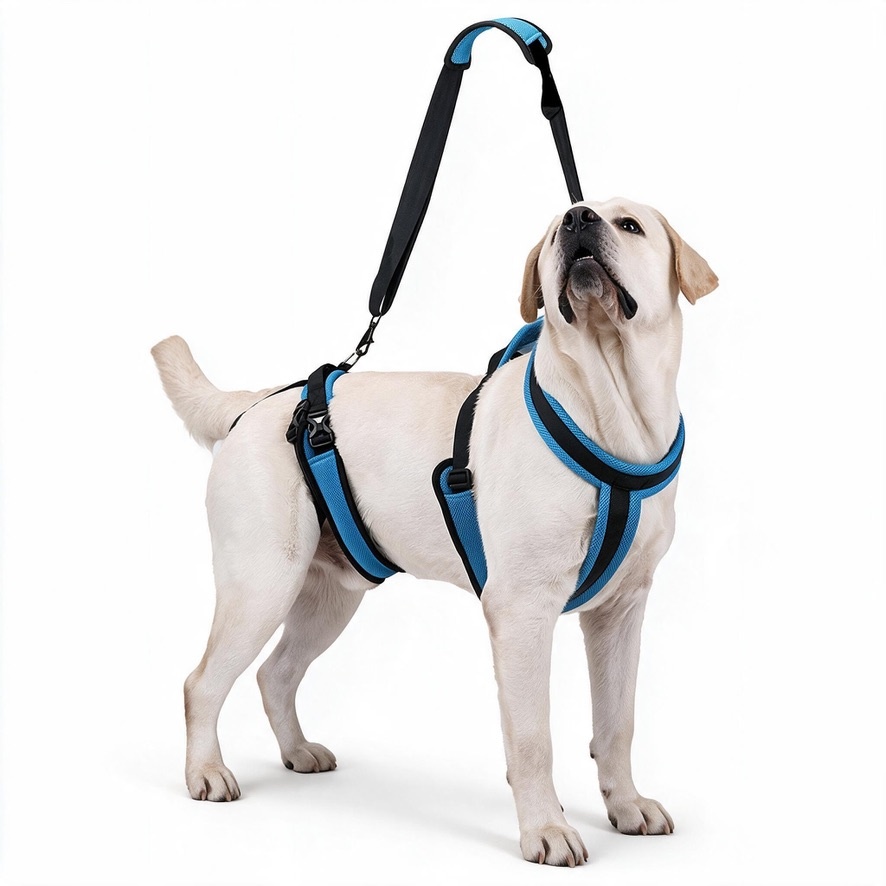
Adjustable independently front and rear, so the fit can change as swelling goes down and muscle comes back.
What Mistakes Do Owners Make During Recovery?
The same few mistakes come up again and again after leg surgery, and most of them come from underestimating how long recovery really takes:
- Lifting by the collar or scruff. This puts sudden pressure through the neck and spine and gives you no control over the healing leg. Use the harness's rear or front handle instead.
- Skipping the harness for "just a quick trip outside." Most slips happen on short, unplanned trips, not on the scheduled walks owners are already careful about.
- Letting a dog off leash too soon because they "seem fine." Dogs on pain relief often move more confidently than their leg can actually support.
- Forgetting support for car trips. Getting in and out of a car boot or back seat is one of the highest-risk moments for a healing leg. We've written a full guide to safely lifting a dog with weak back legs into the car, and the Lupo harness's rear handle is built for exactly that moment.
When Can You Stop Using a Support Harness?
Only your vet can confirm when your dog is fully healed, and that decision should be based on a follow-up exam or X-ray, not on how your dog looks or acts at home. Most owners reduce harness use gradually over weeks 8 to 16, using it less on flat, familiar ground and keeping it on for stairs, slippery floors, and longer walks until they get the final all-clear. Some owners, especially with senior dogs or dogs that had a second leg operated on later in life, keep using the Lupo harness well beyond the surgical recovery window simply because the extra support helps day to day.
Frequently Asked Questions
Can I use the Lupo Two-Piece Lift Harness right after surgery?
Yes, but check with your vet first, since the exact timing depends on the procedure and your dog's incision. Most owners start using the rear piece for short, supported toilet trips in the first week, then bring in the front piece as walks lengthen.
Does the harness put pressure on the incision?
The two-piece design is built to avoid this. Because the front and rear pieces are separate and independently adjustable, you can position each one clear of the surgical site rather than having a single strap sit directly over it.
How is this different from a regular walking harness?
A standard walking harness is built to clip a leash to the back, not to lift or support a dog's weight. The Lupo Two-Piece Lift Harness has a dedicated padded lift handle on the front piece and another on the rear piece, so you can actively support your dog's weight rather than just attach a leash.
Will the Lupo harness fit a small dog recovering from surgery?
The Lupo Two-Piece Lift Harness comes in three sizes, S, M, and L, and each piece adjusts independently, so it fits a wide range of breeds and body shapes recovering from leg surgery, not just large dogs.
How long should I keep using a support harness after TPLO surgery?
Most dogs need the most support in the first 8 weeks, while the bone is healing, and can gradually use it less over the following 8 weeks as muscle and confidence return. Always confirm the timeline with your vet rather than a fixed calendar date.
Give Your Dog Real Support Through Every Week of Recovery
The Lupo Two-Piece Lift Harness, €149.00, with free EU shipping on orders over €75.
Shop the Lupo Harness →30-day money-back guarantee. Ships from the Netherlands.
0 comments